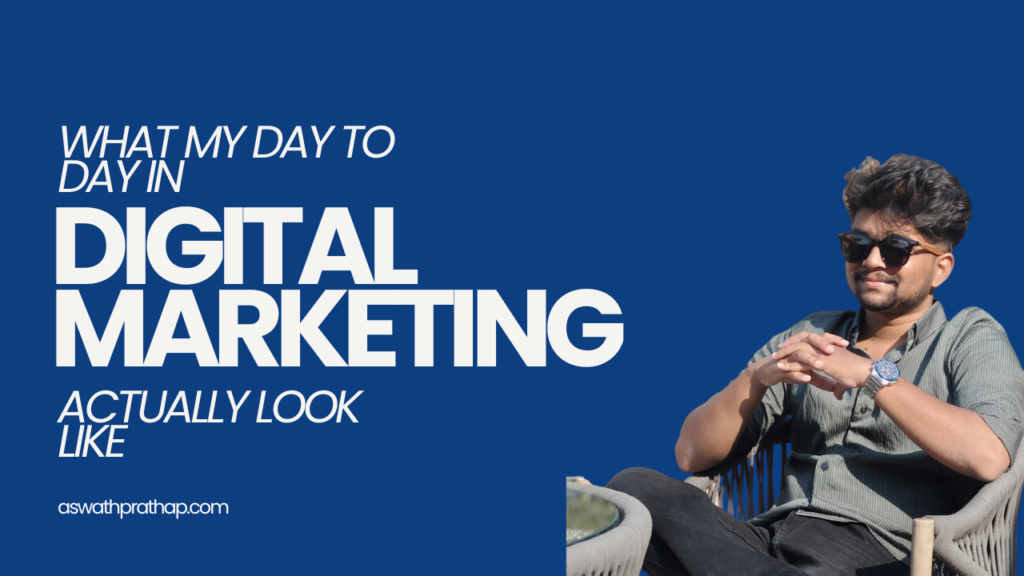
What My Day-to-Day in Digital Marketing Actually Looks Like
What My Day-to-Day in Digital Marketing Actually Looks Like People considering a move into digital marketing usually picture one of two extremes. Either it’s glamorous, all creative brainstorms and clever campaigns, or it’s a grind of endless spreadsheets and dashboards. Neither picture is accurate. The real day is a lot messier, a lot more reactive, and honestly a lot less exciting than either version, but in a way that ends up being satisfying once you get used to it. Here’s what an actual day tends to look like, not the highlight reel version. Mornings are mostly checking what happened while I wasn’t looking The first chunk of my day is rarely creative. It’s checking. Did that email send properly overnight. Did the ad spend behave the way it was supposed to or did something spike. Did anything break, get flagged, or perform strangely enough to need attention before it turns into a bigger problem later. This part sounds boring written out like this, and honestly it is a bit boring, but it’s also where a lot of the real value of the job happens. Catching a budget that’s overspending at 8am instead of noticing it at 4pm is the difference between a minor correction and an uncomfortable conversation with a client. Most of the job is quiet vigilance, not big dramatic moves. A lot of the day is writing, rewriting, and then rewriting again Once the checking is done, most of my time goes into some form of writing. Ad copy, email subject lines, landing page sections, social captions, sometimes a longer piece like this one. I lean on AI tools for the first rough pass a lot of the time now, mostly because staring at a blank page used to eat an hour I don’t have anymore. But the actual work is what happens after that first draft. That’s the part beginners underestimate. The first version, whether it comes from a tool or from me typing badly for ten minutes, is never the version that goes live. It gets cut down, made specific, stripped of anything that sounds like it could belong to any brand instead of this one. Editing with intent is honestly a bigger skill than writing from scratch, and it’s the part nobody teaches you in a beginner course. Meetings that are shorter and more scattered than people expect There’s a meeting somewhere in most days, sometimes two, but they’re rarely the long strategic sessions people imagine. More often it’s a fifteen minute check-in about a campaign that’s underperforming, or a quick call to align on messaging before something goes out. Digital marketing moves fast enough that long meetings tend to feel wasteful. The good ones are short, specific, and end with someone actually knowing what to do next. Data shows up constantly, but rarely in a clean way I look at numbers a lot throughout the day, but not in the tidy, confident-looking-dashboard way people picture. It’s more like checking in on something the way you’d check on bread rising. Is this trending the way I expected. Does this number match the story I thought was happening, or is it telling me something I need to dig into. Half the time the answer isn’t obvious. Numbers in marketing are rarely a clean yes or no, they’re a nudge in a direction, and figuring out what they actually mean takes more judgment than people expect walking into this field. This is probably the single most underestimated skill in the job, reading data that’s a little bit fuzzy and still making a confident call anyway. The afternoon is usually where the actual strategy happens By afternoon, once the fires are out and the drafts are moving, there’s usually a stretch where I get to think more than react. Planning the next campaign, figuring out why a particular audience segment isn’t responding the way I expected, deciding whether it’s worth testing a new channel or doubling down on what’s already working. This is the part that actually resembles what people picture when they imagine this job, and honestly it’s my favorite part of the day. It’s also the smallest part, time-wise, which surprises a lot of newcomers. The strategic, creative thinking people assume is the whole job is really just one slice of it, sitting on top of a much bigger pile of maintenance and reaction. Nothing about it is as tidy as it sounds on paper If I’m honest, most days don’t go in a straight line. Something breaks that wasn’t supposed to break. A client changes their mind about a direction we agreed on last week. A campaign that was supposed to be a quick win takes three extra days because the data came back confusing instead of clear. The job rewards people who are comfortable with that kind of mess and can stay calm inside it, more than it rewards people who wanted a clean, predictable schedule. What I’d actually tell someone considering this move If you’re thinking about moving into digital marketing, know that the appealing, creative part is real but small, and the unglamorous checking, editing, and troubleshooting is where most of your hours will actually go. That’s not a discouraging thing to hear, it’s just the honest shape of the job. The people who end up liking it long term are usually the ones who find some genuine satisfaction in that unglamorous middle section, not just the highlight reel moments everyone talks about online.